Skip to content
    • info@sciencetheory.net
  • Connecting and sharing with us
  • -
  • About us
    • info@sciencetheory.net
HKT ConsultantHKT Consultant
  • Management Theories
    • Industrial Organization
      • Competitive Advantage Theory
      • Contingency Theory
      • Institutional Theory
      • Evolutionary Theory of the Firm
      • Theory of Organizational Ecology
      • Behavioral Theory of the Firm
      • Resource Dependence Theory
      • Invisible Hand Theory
    • Managerial Approaches
      • Agency Theory
      • Decision Theory
      • Theory of Organizational Structure
      • Theory of Organizational Power
      • Property Rights Theory
      • The Visible Hand
    • Hypercompetitive Approaches
      • Resource-Based Theory
      • Organizational Learning Theory
      • Transaction Cost Economics
      • Hypercompetition
      • Systems Theory
  • Economic Theories
  • Social Theories
  • Political Theories
  • Philosophies
  • Theology
  • Art Movements
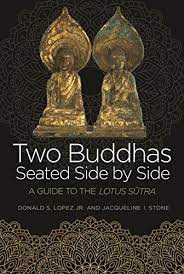
The Buddhist Universe – Chapter 7: Two Buddhas Seated Side by Side

We saw in the previous chapter that there is only one buddha for each age, that indeed, the universe cannot sustain more than one buddha in each age. Buddhas thus appear individually over the long course of samsara, with a new buddha appearing only when a new buddha is needed, that is, when the

01
Aug
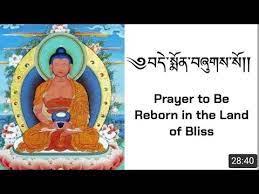
The Buddhist Universe – Chapter 8: Rebirth in the Land of Bliss

Rebirth in an auspicious realm is a ubiquitous concern in the Buddhist traditions, with practice directed towards avoiding a sorrowful rebirth and assuring a happy rebirth, whether for oneself or for others. Among the six realms of rebirth, those of humans and gods are considered happy; one is reborn there as a result of

2 Comments

01
Aug
The Buddhist Universe – Chapter 9: Avoiding Hell, Gaining Heaven

In the first centuries of Buddhism in Japan, the recitation of the homage to Amitabha (in Japanese namu amida butsu) as recommended in the longer and shorter Sukhavati sutras, was used primarily as a means of protecting the living by sending the spirits of the dead to the pure land, and thus was regarded

1 Comments

01
Aug
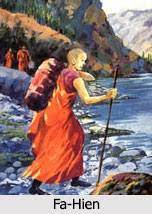
The Buddhist Universe – Chapter 10: A Chinese Pilgrim in India

Buddhism is a religion that extended over much of Asia. It did so not through a disembodied dharma descending on one culture after another, but rather through a more material movement – of monks, texts, relics and icons – along trade routes and across deserts, mountains and seas. And among those who received it,

1 Comments

01
Aug
The Buddhist Universe – Chapter 11: A Sacred Peak

Pilgrimage has long been regarded as a meritorious practice in Buddhism. As he was about to pass into nirvana, the Buddha is said to have recommended paying homage to the sites of his birth, enlightenment, first sermon and death. Pilgrimage centres developed at these and other places in India, places often associated with events

1 Comments

01
Aug
The Buddhist Universe – Chapter 12: Maitreya Describes the Future

Perhaps the best-known story in all of Thai Buddhism tells of the arhat monk Phra Malai, who one day encountered a poor grass cutter who presented him with eight lotuses, asking that the merit from his gift result in his never being reborn as a poor man again. In order to fulfil his request,

1 Comments

01
Aug
The Buddha – Chapter 13: The Three Jewels

The recitation of the formula I go for refuge to the Buddha. I go for refuge to the dharma. I go for refuge to the sangha’ (recited three times) is the most fundamental Buddhist practice, the Buddhist correlate to the confession of faith. The practice of taking refuge is said to derive from the

1 Comments

01
Aug
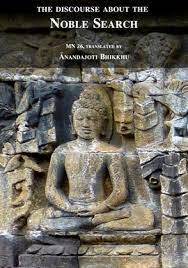
The Buddha – Chapter 14: The Noble Search

Given the importance of the Buddha for Buddhism, it is noteworthy that biographies of the Buddha, that is, chronological accounts of the events of his life from his birth to his death, are a late addition to Buddhist scriptures. The first such texts appear some five hundred years after his passage into nirvana. This

1 Comments

01
Aug
The Buddha – Chapter 15: A Life of the Buddha

As noted in the previous chapter, the earliest accounts of the life of the Buddha are those found in the collections of discourses traditionally attributed to the Buddha. Here the Buddha autobiographically recounts individual events that occurred from the time that he left his life as a prince until he achieved enlightenment six years

1 Comments

01
Aug
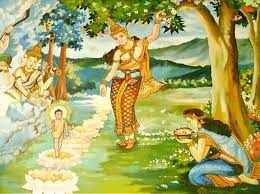
The Buddha – Chapter 16: Maya, Mother of the Buddha

In Chapter 14, the Buddha recounted how he left his weeping parents and went off in search of a state beyond suffering. In Chapter 6, Nagasena explained to King Milinda that the universe can sustain only one buddha at a time. Things did not remain that simple. In accounts of the Buddha’s birth, it

2 Comments

01
Aug
The Buddha – Chapter 17: Why the Buddha Had Good Digestion

The Buddha was remarkable in mind and body. He was said to be endowed physically, for example, with the thirty-two major marks and eighty secondary marks of a superman, and his voice had sixty-four kinds of euphony. Such qualities of the Buddha were the direct result of his practice of virtue in former lives,

2 Comments

01
Aug
The Buddha – Chapter 18: A King Gives Away His Head

In Buddhism, no deed is more universally praised than the act of giving (dana). It is, of course, the charity of the laity towards monks and nuns that sustains the sangha. The giving of gifts in this life results in rebirth in the luxuriant heavens of the gods in the future. But giving is

1 Comments

01
Aug
The Buddha – Chapter 19: Rupyavati Gives Away Her Breasts

There are stories of the Buddha’s past lives as an animal (a rabbit, a deer, a fish), and stories of the Buddha’s past lives as a male human (as an ascetic, a merchant, a prince, or a king). But stories of the past lives of the Buddha in which the bodhisattva is a woman

1 Comments

01
Aug
The Buddha – Chapter 20: How the Buddha Became a Bodhisattva

The Buddha brought the dharma to our world, for our age. But, as is clear from preceding chapters, he was not the first buddha, and he was not (at least according to some) the only buddha present in the universe at the time. Yet, he is our buddha and thus is regarded with especial

2 Comments

01
Aug
The Buddha – Chapter 21: Proving the Buddha

Buddhism arose in India during a period of intense reflection on the nature of knowledge and the true sources of knowledge. As with so many elements of scholastic traditions, Buddhists did not only engage in discussions of these issues among themselves; they read, reacted to, and debated against the positions put forth by proponents

09
Sep
The Buddha – Chapter 22: Enshrining a Relic

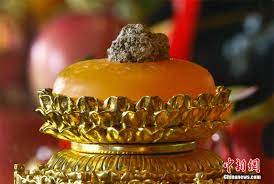
Throughout the history of Buddhism and across the Buddhist world, relics have been considered potent objects, bestowing blessings and power on those who worship them. The monuments in which relics are enshrined, called stupas in India and pagodas in China, were not considered to contain bits of ash and bone, but were said to

09
Sep
The Buddha – Chapter 23: The Consecration of a Buddha Image

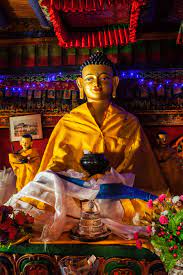
One of the most common objects of veneration in Buddhism is an image of the Buddha, whether it be in the form of a statue or a painting. Such images, however, are not considered suitable for veneration unless they have been consecrated. Ceremonies of consecration are thus among the most important, and the most

09
Sep
The Buddha – Chapter 24: A Hymn to the Buddha

The Buddha seems to have been an object of devotion, praise and homage from the beginning of the Buddhist tradition in India. As the tradition developed, he was not the only buddha to receive such devotion, but he was always held in special esteem as the buddha who compassionately chose to be born in,

12
Sep
Monastic Life – Chapter 25: The Evolution of Ordination

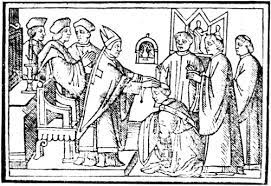
The sangha came into existence when the group of five who heard the Buddha’s first sermon requested his permission to go forth and be ordained. The Buddha ordained them simply by saying to each of them, *Come, monk’ (ehi bhikkhu). This same simple formula was used for the next group to hear the dharma,

12
Sep
Monastic Life – Chapter 26: Making Men into Monks

The procedures for the ordination of monks evolved over time. At the beginning of the process, it was the Buddha’s simple instruction, ‘Come, monk’, that made a man a monk. This developed into a number of more formal procedures (described in the previous chapter), which were abandoned after certain problems arose. At the end

12
Sep
  • 1
  • …
  • 24
  • 25
  • 26
  • 27
  • 28
  • 29
List of Great Thinkers
01
Jan
List of Economic Theories and Concepts
24
Feb
List of Social Theories and Concepts
22
Feb
List of Political Theories and Concepts
21
Feb
List of Philosophical Theories and Concepts
22
Feb
Famous books and articles in library
01
Jan
Corporate Management
  • Supply Chain and Supply Chain ManagementSupply Chain and Supply Chain Management
  • Office Management: definition, types, process, jobs and best practicesOffice Management: definition, types, process, jobs and best practices
  • Stock market: functioning and investmentsStock market: functioning and investments
  • Retail Management: Definition, Processes, Best PracticesRetail Management: Definition, Processes, Best Practices
  • Entrepreneurship and StartupEntrepreneurship and Startup
  • Management Information SystemManagement Information System

Methodology & Skills
  • Qualitative Research (interview, case study, observation, action research …)Qualitative Research (interview, case study, observation, action research …)
  • Research MethodologyResearch Methodology
  • How to write and publish a scientific paperHow to write and publish a scientific paper
  • How to write a thesisHow to write a thesis
  • Quantitative research and Statistical software practices (SPSS, Stata, Amos, …)Quantitative research and Statistical software practices (SPSS, Stata, Amos, …)
  • Create your professional WordPress website without codeCreate your professional WordPress website without code

Connecting and sharing with us

... by your free and real actions.

hotlineTComment and discuss your ideas

Enthusiastic to comment and discuss the articles, videos on our website by sharing your knowledge and experiences.

hỗ trợ hkt Respect the copyright

Updating and sharing our articles and videos with sources from our channel.

hỗ trợ hkt Subscribe and like our articles and videos

Supporting us mentally and with your free and real actions on our channel.

HKT Channel - Science Theories

About HKT CHANNEL
About HKT CONSULTANT

Website Structure

Economic Theories
Social Theories
Political Theories
Great Thinkers
Library

HKT Consultant JSC.

      "Knowledge - Experience - Success"
- Email: Info@sciencetheory.net
- Website:
sciencetheory.net

  • Management Theories
    • Industrial Organization
      • Competitive Advantage Theory
      • Contingency Theory
      • Institutional Theory
      • Evolutionary Theory of the Firm
      • Theory of Organizational Ecology
      • Behavioral Theory of the Firm
      • Resource Dependence Theory
      • Invisible Hand Theory
    • Managerial Approaches
      • Agency Theory
      • Decision Theory
      • Theory of Organizational Structure
      • Theory of Organizational Power
      • Property Rights Theory
      • The Visible Hand
    • Hypercompetitive Approaches
      • Resource-Based Theory
      • Organizational Learning Theory
      • Transaction Cost Economics
      • Hypercompetition
      • Systems Theory
  • Economic Theories
  • Social Theories
  • Political Theories
  • Philosophies
  • Theology
  • Art Movements
  • About Us