Skip to content
    • info@sciencetheory.net
  • Connecting and sharing with us
  • -
  • About us
    • info@sciencetheory.net
HKT ConsultantHKT Consultant
  • Management Theories
    • Industrial Organization
      • Competitive Advantage Theory
      • Contingency Theory
      • Institutional Theory
      • Evolutionary Theory of the Firm
      • Theory of Organizational Ecology
      • Behavioral Theory of the Firm
      • Resource Dependence Theory
      • Invisible Hand Theory
    • Managerial Approaches
      • Agency Theory
      • Decision Theory
      • Theory of Organizational Structure
      • Theory of Organizational Power
      • Property Rights Theory
      • The Visible Hand
    • Hypercompetitive Approaches
      • Resource-Based Theory
      • Organizational Learning Theory
      • Transaction Cost Economics
      • Hypercompetition
      • Systems Theory
  • Economic Theories
  • Social Theories
  • Political Theories
  • Philosophies
  • Theology
  • Art Movements
Monastic Life – Chapter 27: A Murderer Becomes a Monk

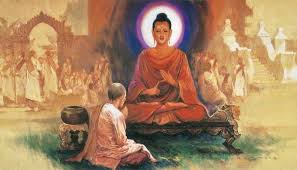
The sangha grew through the Buddha’s encounters with all manner of persons, to whom he taught the dharma. Not all listened. Among those who did, some became monks, some became lay disciples. Stories of these encounters form an important part of the tradition. Among these, perhaps none is more famous than the story of

12
Sep
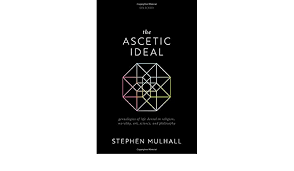
Monastic Life – Chapter 28: The Ascetic Ideal

Buddhism has long been famous for its celebration of the virtues of solitude and renunciation of the world. One of the most famous, and one of the earliest, expressions of these ideals is to be found in a poem known as the Rhinoceros Horn Sutta. It is the third sutra in the Sutta Nipata,

12
Sep
Monastic Life – Chapter 29: Monks in the Mahayana

The Mahayana has sometimes been portrayed as a kind of revolution in the history of Buddhism, in which the narrow monastic goal of nirvana was replaced by the greater goal of buddhahood, a goal that is made available to both monk and layperson, male and female. There are indeed texts which speak of the

12
Sep
Monastic Life – Chapter 30: Making New Monastic Rules

Some Buddhist texts and doctrines travelled from India to other parts of Asia more easily than others. One genre of texts that did not make the transition without difficulty was the codes of monastic discipline, especially in their movement to China. Chinese monks faced the initial problem of not knowing what rules they should

12
Sep
Monastic Life – Chapter 31: Lives of Eminent Monks and Nuns

Stories of renowned monks and nuns are told throughout the Buddhist world, but it was in East Asia (beginning in China) that compilations of the lives of eminent monks and nuns developed into a significant literary genre. There is little evidence of such works in India, suggesting that these Chinese works developed from indigenous

12
Sep
Monastic Life – Chapter 32: The Nine Patriarchs of the East

For a tradition that traces its origins to an enlightened master, the notion of the transmission of the master’s teachings is crucial. What is the route whereby the master’s teachings made their way to the present? And how can the authenticity of that route be assured? Has the line of transmission ever been interrupted

12
Sep
Monastic Life – Chapter 33: Taking the Vinaya Across the Sea

Buddhist nations have long counted the ordination of monks and the founding of monasteries among the significant moments in their histories. The rules of monastic discipline (vinaya) require that a novice seeking to become a fully ordained monk (bhiksu) receive ordination from a group of ten fully ordained monks. If the ordination is to

12
Sep
Monastic Life – Chapter 34: Zen for National Defence

The various schools and sects that have developed and, in some cases, disappeared over the history of Buddhism have not occurred in a simple linear progression. New movements have arisen among existing schools, and, if they are to succeed, it is necessary that they distinguish themselves from their contemporaries. In order to gain followers,


12
Sep
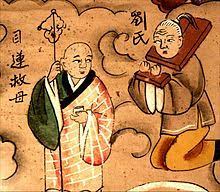
Monastic Life – Chapter 35: How a Monk Freed his Mother from Hell

It is sometimes assumed that when a Buddhist renounces the world to become a monk or a nun all communication and concern with his or her family ceases. However, there is ample evidence from India that monks and nuns maintained contact with their families and were concerned with the welfare of their departed parents,

12
Sep
Monastic Life – Chapter 36: Living in the Degenerate Age

The Buddha had said that, whether or not buddhas appear in the world, the nature of the dharma remains the same. He also said, however, that the dharma would disappear. These two statements are not contradictory. The first would seem to mean that the nature of reality is unchanging, regardless of whether buddhas appear

12
Sep
Meditation and other Rituals – Chapter 37: The Direct Path to Enlightenment

Buddhist meditation classically is divided into two forms, which might be referred to as stabilizing meditation and analytical meditation. The former involves the development of deepening levels of mental concentration, while the latter involves the development of insight into the nature of reality. The precise relation of these two forms of meditation, and the

13
Sep
Meditation and other Rituals – Chapter 38: Wisdom and Compassion

Modern descriptions of the Mahayana sutras, a huge collection of texts that began to be composed in India around the beginning of the Common Era, often focus on two topics: the wisdom of emptiness (sunyata) and the compassion of the bodhisattva. Such descriptions are in some ways misleading. The Mahayana sutras are a heterogeneous

13
Sep
Meditation and other Rituals – Chapter 39: Serenity and Discernment

Throughout the history of Buddhism in India, expositions of meditation typically grouped practices under two headings: those with the goal of deep concentration and those with the goal of insight into the nature of reality. Although certain practices (such as the ‘foundations of mindfulness’ set out in Chapter 37) claimed to achieve the two

13
Sep
Meditation and other Rituals – Chapter 40: On the Relation of Study and Meditation

Each of the traditions of Buddhism in Asia has thousands of texts, some originating in India and translated into the local language, others produced locally but presented in the guise of Indian texts, yet others written in the vernacular to comment in some way on the Indian corpus. What, if anything, do these texts

13
Sep
Meditation and other Rituals – Chapter 41: Both Sudden and Gradual Enlightenment

The question of sudden versus gradual enlightenment was a sustained concern in East Asian Buddhism. One of the more sustained elaborations of the problem was that of the Huayan and Chan master Zongmi (780-841), who explored the possible combinations of sudden and gradual. Gradual cultivation followed by sudden enlightenment was like gradually chopping down

13
Sep
Meditation and other Rituals – Chapter 42: Reciting the Name of the Buddha

It is prophesied in numerous texts that the teachings of the Buddha will one day disappear from the world. The prophecies differ on how long the dharma will remain after the death of the Buddha; some say only five hundred years, some say two thousand. But all describe a gradual process of decline, not

13
Sep
Meditation and other Rituals – Chapter 43: The Bodhisattva Vow

A bodhisattva is someone who vows to achieve buddhahood in order to free all beings in the universe from suffering. In the early tradition, the term was used to refer to the Buddha in his millions of lives from the time that he made such a vow himself (see Chapter 15) to his achievement

13
Sep
Meditation and other Rituals – Chapter 44: Freeing Birds and Fish from Bondage

Much Buddhist practice is the practice of restraint, especially the restraint of body, speech and mind in order to avoid the performance of negative deeds that will result in suffering in the future. Refraining from non-virtue, whether it be physical, verbal or mental, is said to produce merit, especially when it is motivated by

13
Sep
Meditation and other Rituals – Chapter 45: Against Animal Sacrifice

Contrary to common assumptions, not all Buddhists are vegetarians. The consumption of meat was not prohibited even for monks and nuns in the early tradition. The Indian monastic codes state instead that monks and nuns may not eat the flesh of an animal that was slaughtered specifically to feed them. The promotion of a

13
Sep
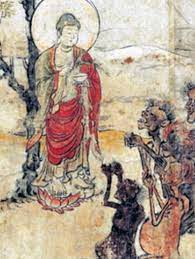
Meditation and other Rituals – Chapter 46: Feeding Hungry Ghosts

As described in Chapter 1, ghosts suffer from hunger and thirst. They are constantly seeking food and drink, and when they find it they encounter obstacles. The Sanskrit term that is rendered here as ‘ghost’, preta, means ‘departed’, suggesting that these ghosts are the wandering spirits of departed ancestors whose families have failed to

13
Sep
  • 1
  • …
  • 25
  • 26
  • 27
  • 28
  • 29
List of Great Thinkers
01
Jan
List of Economic Theories and Concepts
24
Feb
List of Social Theories and Concepts
22
Feb
List of Political Theories and Concepts
21
Feb
List of Philosophical Theories and Concepts
22
Feb
Famous books and articles in library
01
Jan
Corporate Management
  • Retail Management: Definition, Processes, Best PracticesRetail Management: Definition, Processes, Best Practices
  • International Business – Meaning, Process, Types & FactorsInternational Business – Meaning, Process, Types & Factors
  • Human Resource Management and Organizational CultureHuman Resource Management and Organizational Culture
  • Stock market: functioning and investmentsStock market: functioning and investments
  • Corporate accounting: definition, functions and branchesCorporate accounting: definition, functions and branches
  • Production Management : Definition, Function and ScopeProduction Management : Definition, Function and Scope

Methodology & Skills
  • Qualitative Research (interview, case study, observation, action research …)Qualitative Research (interview, case study, observation, action research …)
  • Learn Programming Languages (JavaScript, Python, Java, PHP, C, C#, C++, HTML, CSS)Learn Programming Languages (JavaScript, Python, Java, PHP, C, C#, C++, HTML, CSS)
  • Quantitative research and Statistical software practices (SPSS, Stata, Amos, …)Quantitative research and Statistical software practices (SPSS, Stata, Amos, …)
  • Create your professional WordPress website without codeCreate your professional WordPress website without code
  • How to write and publish a scientific paperHow to write and publish a scientific paper
  • Research MethodologyResearch Methodology

Connecting and sharing with us

... by your free and real actions.

hotlineTComment and discuss your ideas

Enthusiastic to comment and discuss the articles, videos on our website by sharing your knowledge and experiences.

hỗ trợ hkt Respect the copyright

Updating and sharing our articles and videos with sources from our channel.

hỗ trợ hkt Subscribe and like our articles and videos

Supporting us mentally and with your free and real actions on our channel.

HKT Channel - Science Theories

About HKT CHANNEL
About HKT CONSULTANT

Website Structure

Economic Theories
Social Theories
Political Theories
Great Thinkers
Library

HKT Consultant JSC.

      "Knowledge - Experience - Success"
- Email: Info@sciencetheory.net
- Website:
sciencetheory.net

  • Management Theories
    • Industrial Organization
      • Competitive Advantage Theory
      • Contingency Theory
      • Institutional Theory
      • Evolutionary Theory of the Firm
      • Theory of Organizational Ecology
      • Behavioral Theory of the Firm
      • Resource Dependence Theory
      • Invisible Hand Theory
    • Managerial Approaches
      • Agency Theory
      • Decision Theory
      • Theory of Organizational Structure
      • Theory of Organizational Power
      • Property Rights Theory
      • The Visible Hand
    • Hypercompetitive Approaches
      • Resource-Based Theory
      • Organizational Learning Theory
      • Transaction Cost Economics
      • Hypercompetition
      • Systems Theory
  • Economic Theories
  • Social Theories
  • Political Theories
  • Philosophies
  • Theology
  • Art Movements
  • About Us